

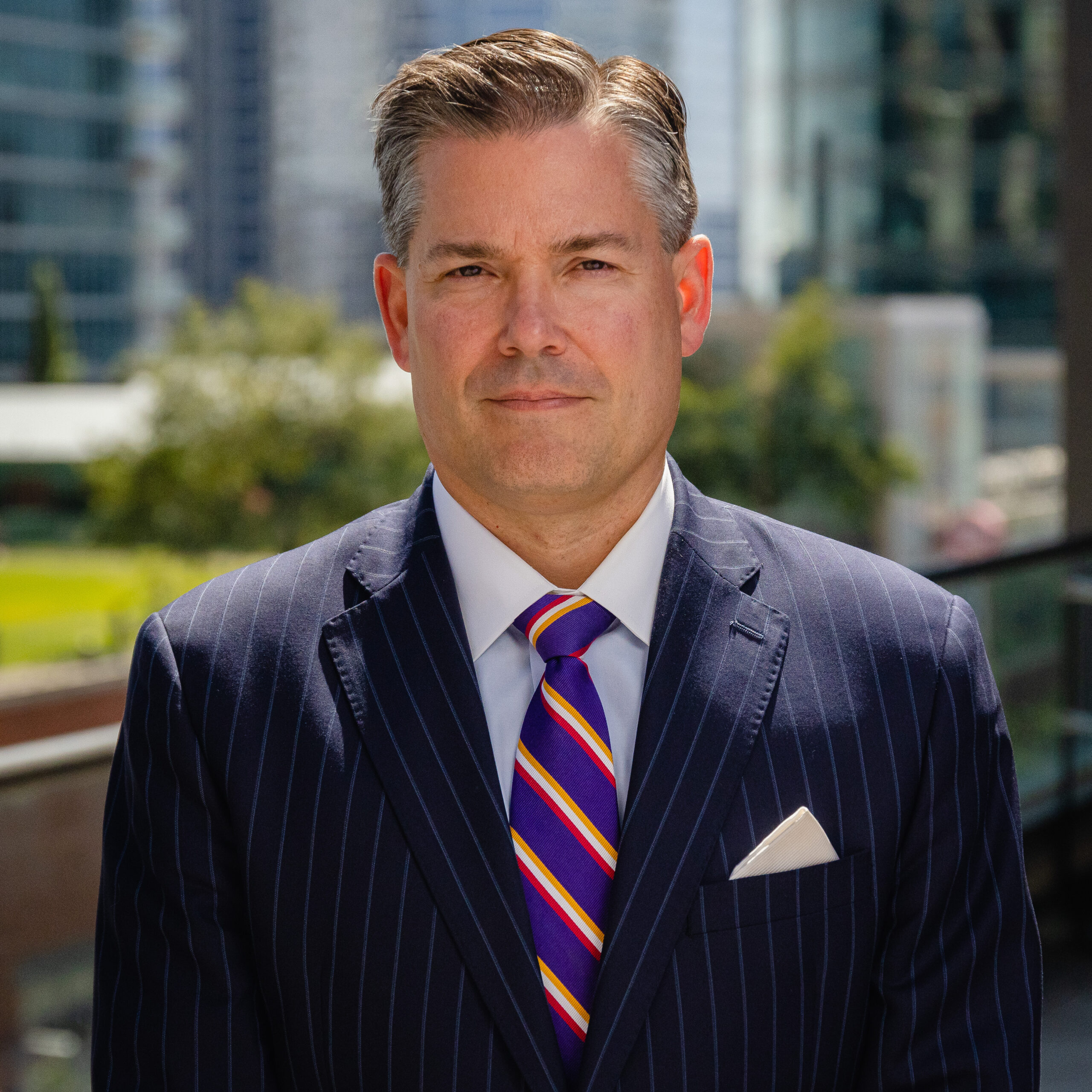
Edward “Eddie” Greim is a trial and appellate lawyer whose practice focuses on complex commercial litigation, free speech and election law, and internal investigations and whistleblower matters. Widely regarded as a go-to lawyer on constitutional and policy issues, he was named a Constitutional and Election Law Trailblazer by the National Law Journal in 2020 and a Missouri Lawyers Media POWER 30 Appellate Attorney in 2021. His work includes leading the first and only nationwide class action certified against the IRS for viewpoint discrimination, successfully challenging campaign finance restrictions and secret criminal investigations targeting political groups, litigating redistricting issues at the state and federal levels (including U.S. Supreme Court amicus work in Rucho), challenging emergency executive powers during the COVID-19 pandemic, representing public officials and private citizens subject to politically motivated “lawfare,” and overseeing complex internal investigations. Eddie has argued before the Missouri and Kansas supreme courts, numerous state appellate courts, and multiple U.S. Courts of Appeals. He earned his J.D. from Harvard Law School, where he received the Dean’s Award for Leadership, and holds dual summa cum laude bachelor’s degrees in economics and political science from the University of Missouri. A native of Excelsior Springs, Missouri, Eddie lives in Kansas City with his family and enjoys Missouri and military history, reading, debate, and exploring local historical sites with his wife and daughters.
Doors Open: 5:30PM
Film Begins: 6:00PM (please arrive early to allow time for check in and concessions)
American Public Square is excited to partner with Glenwood Arts Theater to screen PUBLIC DEFENDER and open a retrospective discussion on January 6th, five years after the fact. This film follows Heather Shaner, a feisty, blue-haired defense attorney in Washington, DC, who has spent over 45 years representing people who can’t afford a lawyer. But her empathy is tested when a violent mob supporting outgoing President Donald Trump storms the U.S. Capitol and she is assigned to represent Jack Griffith, a social media influencer, and Annie Howell, a single mother and painter.
PUBLIC DEFENDER explores the delicate state of U.S. democracy, the forces threatening to tear it apart, and the people dedicated to protecting it. When trust is lost amidst a growing political divide, the unlikely bonds between Heather and her clients reveal how people can rise above the fray to find each other’s humanity.
After the screening:
Presidential Power, Accountability, and the Legacy of January 6
Following the screening of Public Defender, this panel brings together legal experts and the filmmaker for a timely and in-depth conversation on one of the most consequential questions in American law and democracy: the extent and limits of the presidential pardon power.
Building on themes of justice and constitutional rights raised in the film, the discussion will explore how the pardon power was designed to function, its historic uses and controversies, and its unique position as one of the most expansive—and debated—executive authorities. The panel will then examine how this power intersects with the events of January 6, including legal analysis surrounding both President Biden and President Trump’s pardons related to January 6th, related issues of accountability, and what these questions reveal about the health of democratic institutions.